
Is repo madness predicting a crack-up?
Rick Ackerman, 21 June 2021
 [The following was written by a San Francisco friend from the hedge fund world, Shawn Brown. It buttresses the suspicion that while there seems to be plenty of credit money available for speculation, the collateral behind it is getting thinner and shakier by the week. The Fed, with $8 trillion of Treasury paper and other top-shelf collateral on its balance sheet, has monopolized the supply, leaving lending banks to scramble for collateral for their own that hasn’t already been hocked twentyfold. As a result, central bank interventions are becoming more frequent, more complex and bigger, to the point where even the experts are having trouble determining whether the banking system is headed for a crack-up far larger than the one that took down Archegos a few months ago. RA] Continue reading “Article: Is repo madness predicting a crack-up?”

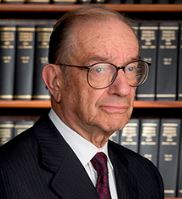 Alan Greenspan served five terms as chairman of the Board of Governors of the Federal Reserve System. His last term ended on January 31, 2006. He was appointed chairman by four different presidents. From 1954 to 1974 and from 1977 to 1987, Greenspan was chairman and president of Townsend-Greenspan & Co., Inc. From 1974 to 1977, he served as chairman of the President’s Council of Economic Advisers under President Gerald Ford, and from 1981 to 1983, as chairman of the National Commission on Social Security Reform. In addition, he served as a member of President Ronald Reagan’s Economic Policy Advisory Board and was a consultant to the Congressional Budget Office. After leaving the Board of Governors, Greenspan began his own Washington DC-based consulting firm, Greenspan Associates, LLC. Over the years, Greenspan also held many roles in the public and private sectors. In addition, he served as a corporate director for a number of firms, including Aluminum Company of America (Alcoa); Automatic Data Processing, Inc.; Capital Cities/ABC, Inc.; General Foods, Inc.; J.P. Morgan & Co., Inc.; Morgan Guaranty Trust Company of New York; Mobil Corporation; and The Pittston Company. He received his bachelor’s (summa cum laude), master’s, and doctoral degrees in economics, all from New York University.