
Wirecard: German Parliament slams Scholz and Merkel
Reuters, 07 June 2021
 A committee of lawmakers in the Bundestag has published its inquiry into the Wirecard fraud affair. The damaging report comes months before Germany’s general election.
The public inquiry into the Wirecard scandal published its concluding report on Monday, criticizing Germany’s Finance Minister Olaf Scholz and Chancellor Angela Merkel.
The parliamentary committee consisting of opposition lawmakers ended a monthslong investigation into the scandal with the publication of a 675-page draft report. Continue reading “Article: Wirecard: German Parliament slams Scholz and Merkel”
 German financial regulator BaFin has ordered mobile bank N26 to fix problems with its IT monitoring and customer due diligence to prevent money laundering and terrorist financing.
 Just about three months ago, I wrote a blog post which featured this quote, from Charles P. Kindleberger’s Manias, Panics and Crashes: “Swindles are a response to the appetite for wealth (or plain greed) stimulated by the boom.” Since then, the number of frauds, or swindles, that has been revealed has soared, a clear testament to both the breadth and degree of greed inspired by the current boom.
 What would you do if you were confident you could get away with it? Perhaps you’d rob a bank, or have a wild affair. Or maybe you’d subsist on nothing but candy floss for the rest of your life.
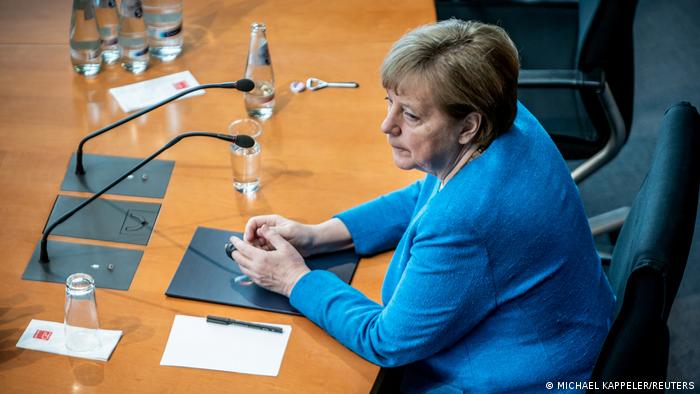 The German chancellor has appeared at a parliamentary inquiry to defend her decision to lobby on behalf of the disgraced banking firm Wirecard in China. The scandal is one of Germany’s biggest ever fraud cases.
 In February 2019, after a steep drop in Wirecard’s share price, German authorities launched criminal probes into short-sellers and journalists who had accused the company of fraud, and banned investors from betting against the company.
 Vanita Gupta was fresh out of law school when she heard about what happened in Tulia, Texas. Two years earlier, in 1999, nearly half of the town’s adult Black population was rounded up in a drug sting on the word of a single undercover cop, accused of selling him small amounts of cocaine. Several convictions swiftly followed, accompanied by sentences of up to 361 years. The remaining defendants, 43 of whom were people of color, started pleading guilty.
 German scandals are not like other scandals. The bouquet of a classic German scandal contains unmistakable notes: a rabbit-hole impenetrability, the implication of an entire guilt-ridden society, and, most importantly, a sense that the controversy says something essential about Germany as a whole. German scandals are collectivized. They are about a belief in German difference, for good or ill.
  On Monday, I reported that Markus Braun, the billionaire CEO of online payments company Wirecard, faced serious allegations over the company’s rapid growth and questionable business practices. Specifically, regulators and investors were concerned over claims that the FinTech company purported to have $2 billion dollars in a couple of Philippine banks. Investigations conducted by an outside auditor revealed that the money wasn’t there and possibly never existed.
  Founder & Chief Investment Officer at Safkhet Capital