
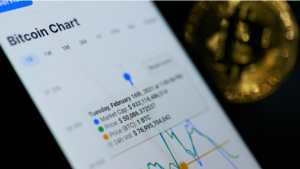
 Bitcoin Shows Us That Not All Volatilities Are Created Equal
Enrique Dans, 09 April 2021
For many people, the main obstacle to using cryptocurrencies is that they are volatile; their value fluctuates sharply across time depending on, apparently, many different factors. To put the issue in context, the original paper on bitcoin was published in late 2008 and the first transaction in early 2009: since then, its value in dollars or euros has risen by more than 15,000%.
In contrast, over the same period of time, the parity between the dollar and the euro, has varied by a few percentage points up or down. No surprise therefore that bitcoin is seen as highly volatile and unsuitable for transactions, and at best, a store of value, subject to the systemic risk that arises every time the authorities or a government make decisions that could affect it. China talks of banning bitcoin mining and its price falls. Elon Musk uses part of Tesla’s reserves to buy bitcoin? Bitcoin rises.
 Florida is suing the Centers for Disease Control and Prevention to resume U.S. cruise sailings, calling the lockdown “arbitrary and capricious” and citing hundreds of millions of dollars in potential losses for the state economy.
 Markets were shaken but unstirred by the collapse of Greensill and the Archegos unwind trades. Credit Suisse is the ultimate loser of the two scandals – reputationally damaged and holed below the water line. The bank is paying the price of years of flawed management, poor risk awareness. and its self-belief it was still a Tier 1 global player. Its’ challenge is to avoid becoming the Deutsche Bank of Switzerland – which it will struggle to do without a radical and unlikely shakeout.
  GameStop plans to elect activist investor Cohen as chairman
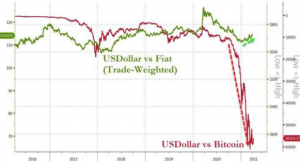 ‘Pro-Crypto’ Peter Thiel Warns Bitcoin “Could Be A Chinese Financial Weapon Against The US”
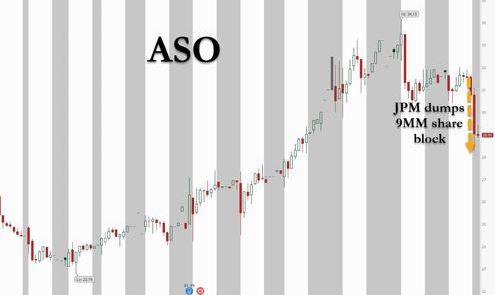 In the aftermath of the Archegos blow up, the biggest nightmare on Wall Street – where there is never just one cockroach – is that (many) more Archegos-style, highly levered “family office” blow ups are waiting just around the corner.
 The collapse of UK-based supply chain finance firm Greensill Capital continues to reverberate. In Germany the private banking association has paid out around €2.7 billion to more than 20,500 Greensill Bank customers as part of its deposit guarantee scheme after the bank collapsed in early March. But the deposits of institutional investors such as other financial institutions, investment firms, and local authorities are not covered. Fifty municipalities are believed to be nursing losses of at least €500 million.
  The GameStop saga stopped the stock market in its tracks earlier this year, with wealthy hedge funds losing millions of pounds. The move was orchestrated on a subreddit thread, with vast numbers of average investors joining forces to push up the share price.
 Goldman Sachs managed to avoid billions of dollars in potential losses from the implosion of highly levered hedge fund Archegos Capital Management by breaking ranks with other syndicate banks to dump large blocks of shares representing Archegos’s exposure to a coterie of tech and media names. When the dust settled, the bank told shareholders any losses would be insignificant, while Credit Suisse, the bank with perhaps the biggest exposure, said Tuesday it has booked a nearly $5 billion loss.