
Article: The Next ‘Gamestop’: How China or Russia Could Attack Our Financial System

Article - Media, Publications

The Next ‘Gamestop’: How China or Russia Could Attack Our Financial System

Robert Carlson, Gray Gaertner, 16 March 2021

Last week, the dramatic rise and fall in the price of Gamestop demonstrated how vulnerable the stock market is to social media speculation. U.S. regulators should now turn their attention to a greater risk—that in the near future, China, Russia, or another adversary could coordinate an unwitting mob to harm the American financial system.

The potential for financial warfare follows from a playbook that China, and especially Russia, have drawn from repeatedly to meddle in U.S. domestic politics. First, foreign state agents have used social media to spread disinformation or stoke existing grievances. Second, they have counted on naive users to share the original posts, allowing the content to reach a larger audience. Finally, they fan the flames to provoke action.

In 2016 and 2020, Russian propaganda decreased U.S. voters’ trust in their candidates and the political system. During last year’s protests over race and policing, foreign bots amplified instances of both racial discrimination and violent protests, further polarizing American society. Following Joe Biden’s electoral victory in November, Russian agents embraced false allegations of fraud, providing the rationale for an armed mob to assault the Capitol Building. China spends at least $10 billion per year on its own influence operations through the United Front Work Department, which promotes pro-Beijing narratives overseas.
Read Full Article

Article: Exchange leaders say GameStop saga highlights regulatory challenges

Article - Media, Publications

Exchange leaders say GameStop saga highlights regulatory challenges

John McCrank, 16 March 2021

NEW YORK (Reuters) – The recent trading frenzy around GameStop Corp and other so-called “meme” stocks highlights shortcomings and challenges in the U.S. markets as retail investors become a bigger presence, exchange leaders said on Tuesday.

“The regulatory structure of the U.S. equity markets, in my mind, is flawed,” Jeff Sprecher, chief executive of New York Stock Exchange owner Intercontinental Exchange Inc, said on a panel at the Future Industry Association’s virtual FIA Boca conference.

Regulators have focused on competition between market intermediaries, like brokers and exchanges, rather than between buyers and sellers seeking to get the best prices, and the GameStop event exposed issues with that structure, he said.

In January, retail investors coordinated through social media forums in an attempt to punish hedge funds by buying shares of GameStop and other heavily shorted names, driving up their prices and forcing short sellers to close out positions at big losses.

Read Full Article

Article: Forget GameStop and short sellers — the SEC says ‘OCMillionaire’ manipulated a worthless stock higher

Article - Media, Publications

Forget GameStop and short sellers — the SEC says ‘OCMillionaire’ manipulated a worthless stock higher

Erin Clark, 16 March 2021

Fool’s gold? The SEC alleges that a stock manipulator sucked investors into a worthless company by claiming it was about to become a big player in cannabis.

If you’ve been following the ludicrous saga of trading in GameStop shares, you’ve probably heard about how short sellers try to profit by manipulating stocks to fall in price.

But that’s not the only way people try to play the market.

The Securities and Exchange Commission just unveiled fraud charges against a trader allegedly trying to profit by manipulating a stock higher.

He’s Andrew Fassari, a 33-year-old Orange County resident. According to the SEC, he staged a vigorous campaign in December using the Twitter handle “OCMillionaire” to suck penny-stock investors into shares of Arcis Resources Corp., which had been defunct for years.

Read Full Article

Article: GameStop Update | Armstrong Economics

Article - Media, Publications

GameStop Update | Armstrong Economics

Martin Armstrong, 15 March 2021

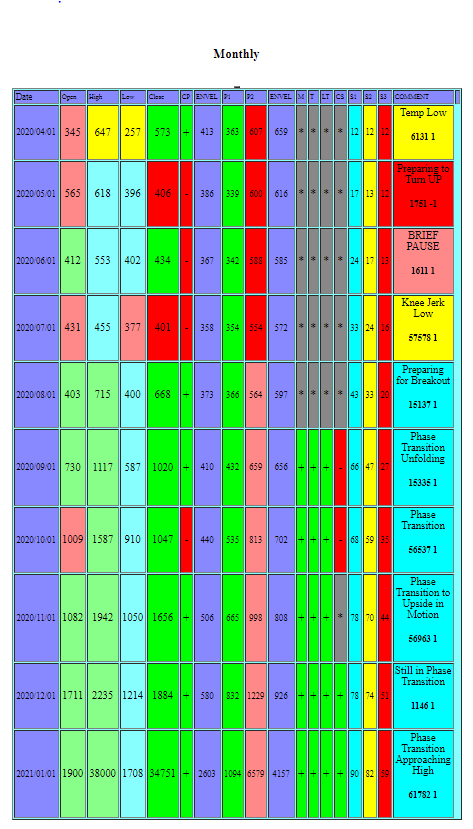
Gamestop has rallied back during the week of March 8th after all the hoopla. Cyclically, it was 13 years down and it was due for a bounce. Even our pattern recognition models picked up the rally starting in August 2020. Quite frankly, this has all the hallmarks of manipulation, but not what you may think. The classic manipulation is to pump up a market touting some player but the pros have already been in the market. This is how the Buffet manipulation of silver was done in 1998 and even the entire Hunt Brothers silver rally back in 1980. Continue reading “Article: GameStop Update | Armstrong Economics”

Article: Trader Arrested as WallStreetBets Phenomenon Finds Echo in Japan

Article - Media, Publications

Trader Arrested as WallStreetBets Phenomenon Finds Echo in Japan

Gearoid Reidy and Shoko Oda, 12 March 2021

(Bloomberg) — A retail investor buys shares in a small company, touts his position on social media and inspires a horde of followers to do the same. The stock price goes to the moon — before crashing back to earth.

It’s an all-too-familiar tale to anyone watching the market in 2021, but this wasn’t GameStop Corp. It wasn’t even in America. And it happened in 2018.

It was in the Japanese city of Osaka, where a day trader who goes by the nickname Tonpin was betting on a tiny maker of precision dies and molds called Nichidai Corp. and broadcasting the fact on Twitter, where he has more than 55,000 followers. The stock surged more than sixfold in the first three months of 2018 before losing most of the gains.

The person behind the nickname was Toru Yamada, a former money manager, and he and another man have just been arrested for market manipulation, according to Japanese media reports. He wasn’t arrested for talking the stock up on Twitter, but on suspicion of trying to keep the share price down — albeit so it would have margin-trading restrictions removed which, when it happened, caused the shares to soar to new highs.

The incident shows how regulators sift through unusual trading patterns and come to conclusions often years later. It may pique the interest of protagonists and observers of the recent meme stock rally in the U.S., such as users of the Reddit forum WallStreetBets.

Yamada has yet to be charged, and it’s not clear whether he will be. And while nobody is suggesting that U.S. traders employed similar tactics to those he’s alleged to have used, the case illustrates the risks that can be associated with becoming a high-profile investor on social media. While you’re in the public spotlight, you may also be in the regulators’ crosshairs.

Read Full Article

Article: GameStop, The Second Surge: Anatomy Of A ‘Gamma Swarm’

Article - Media, Publications

GameStop, The Second Surge: Anatomy Of A ‘Gamma Swarm’

George Calhoun, 10 March 2021

GameStop GME -0.7% is not following the script. Despite the confident predictions by almost all the sideline observers (including myself) that the January frenzy in GME shares would end predictably, and badly… this “Stonk” has suddenly surged a second time, embarrassing the conventional wisdom once again.

When GME first erupted in January, I thought it looked like just a clever way to accelerate a conventional short squeeze. (The mechanics of a short squeeze, and the “gamma” accelerant using call options, are described in my previous column.) On that basis, I expected that it would soon deflate and “return to normal.” The battlefield would be littered with the carcasses of small investors who bought at the top. We’d hear the distant sound of champagne popping in the proud towers of Wall Street and Chicago, and the scolds in the press would treat us to another round of lectures on thrift and the Madness of Crowds.

That’s not what happened. The stock did come down as low as $38, but the deflation didn’t stick. As of this moment mid-day (March 10), GME is again trading above $300 a share. [Things are moving fast. See the Update at the end of this piece.]

Read Full Article

Article: Biggest Players In The Short-Selling Game Are Getting A Pass

Article - Media, Publications

Biggest Players In The Short-Selling Game Are Getting A Pass

ERIK SCHATZKER, BRANDON KOCHKODIN, 10 March 2021

It’s in the air again, on Reddit, in Congress, in the C-suite: Hedge funds that get rich off short-selling are the enemy. The odd thing is, the biggest players in the game are getting a pass.

Those would be the asset managers, pension plans and sovereign wealth funds that provide the vast majority of securities used to take bearish positions. Without the likes of BlackRock Inc. and State Street Corp., the California Public Employees’ Retirement System and the Kuwait Investment Authority filling such an elemental role, investors such as Gabe Plotkin, whose Melvin Capital Management became a piñata for day traders in the GameStop Corp. saga, wouldn’t have shares to sell short.

“Anytime we short a stock, we locate a borrow,” Plotkin said Feb. 18 at the House Financial Services Committee hearing on the GameStop short squeeze.

“Anytime we short a stock, we locate a borrow,” Plotkin said Feb. 18 at the House Financial Services Committee hearing on the GameStop short squeeze.

There’s plenty to choose from. As of mid-2020, some $24 trillion of stocks and bonds were available for such borrowing, with $1.2 trillion in shares—equal to a third of all hedge-fund assets—actually out on loan, according to the International Securities Lending Association.

It’s a situation that on the surface defies logic. Given the popular belief that short sellers create unjustified losses in some stocks, why would shareholders want to supply the ammunition for attacks against their investments? The explanation is fairly straight forward: By loaning out securities for a small fee plus interest, they can generate extra income that boosts returns. That’s key in an industry where fund managers are paid to beat benchmarks and especially valuable in a world of low yields.

The trade-off is simple: For investors with large, diversified portfolios, a single stock plummeting under the weight of a short-selling campaign has little impact over the long run. And in the nearer term, the greater the number of aggregate bets against a stock—the so-called short interest—the higher the fee a lender can charge.

Read Full Article

Article: Russian central bank blocks effort by private investors to coordinate on stocks via Telegram

Article - Media, Publications

Russian central bank blocks effort by private investors to coordinate on stocks via Telegram

Alexander Marrow, 10 March 2021

MOSCOW (Reuters) – Russia’s central bank said on Wednesday it had ordered brokers to block the accounts of more than 60 private investors it suspected of coordinating in a Telegram channel to try to raise the share price of an electric utilities firm.

In a development reminiscent of lurches in U.S. video game retailer GameStop’s stock price in January, the regulator said it had detected non-market pricing on Friday in shares in MRSK Yuga, a Rosseti portfolio company.

The central bank said it had sent instructions to Sberbank, VTB, Tinkoff, Alfa Bank, Otkritie Broker, BCS and Aton to suspend deals and operations on organised trading for individual clients. Continue reading “Article: Russian central bank blocks effort by private investors to coordinate on stocks via Telegram”

Article: Ignoring years of silver price manipulation, Orwellian CFTC now goes after Reddit Apes

Article - Media, Publications

Ignoring years of silver price manipulation, Orwellian CFTC now goes after Reddit Apes

Ronan Manly, Bullion Star, 04 March 2021

On Monday 1 March, an article in Bloomberg Law by CFTC connected lawyers from law firm Clifford Chance revealed that the Commodity Futures Trading Commission (CFTC) is reportedly investigating retail silver trader activity in the silver price and that the US Department of Justice looks set to investigate as well.

Before looking at this shocker of an Orwellian development, it’s helpful to provide some context on the CFTC’s track behavior in this area and to show how hypocritical such a development would be. Continue reading “Article: Ignoring years of silver price manipulation, Orwellian CFTC now goes after Reddit Apes”

Article: Young Koreans are echoing r/WallStreetBets in their war against short sellers

Article - Media, Publications

Young Koreans are echoing r/WallStreetBets in their war against short sellers

Max Kim, Rest of World,  03 March 2021

The Korean Stockholders’ Alliance is located in Yeouido, Seoul’s financial and political district, on the fifth floor of an officetel building mostly occupied by financial companies. Jung Eui-jung, the 62-year-old head of the Alliance and the sole resident of its office, points out the window to a large, bright-yellow bus parked outside on Eunhaengro (“bank street”), so named because it is home to South Korea’s two main state banks. The Alliance is an advocacy group that represents retail investors, with around 41,000 members. Its current mission statement is displayed in block letters on the side of the bus: “I hate short selling!”

Read Full Article

Article: How Regulating GameStop’s ‘Market Manipulation’ Could Harm Crypto

Article - Media, Publications

How Regulating GameStop’s ‘Market Manipulation’ Could Harm Crypto

Benjamin Sauter, Steven Perlstein, William McGovern and David McGill, 02 March 2021

The ongoing roller-coaster ride of GameStop, dogecoin and other so-called meme stocks has led day traders, market makers and exchanges to attack each other with knee-jerk accusations of “market manipulation.” When this happens, the primary winners are government regulators seeking to expand the scope of their authority. Industry cries of market “manipulation” – from all sides – are not only shortsighted. They also risk setting the market on a path towards an enforcement framework that all market participants may come to regret, no matter what side they think they are currently on.

Reddit takes on Wall Street
Since early this year, by sharing tips and organizing on social media platforms such as Reddit and Twitter, individual traders have been able to rally prices of meme stocks to unbelievable heights. First, it was GameStop, AMC and a handful of other targets, with traders sending prices skyward 1,500% or more. Then, traders set their sights beyond the securities markets: dogecoin (DOGE) rose over 800% in 24 hours after a tweet from Elon Musk rallied the masses behind it.

Read Full Article

Article: 77% of people surveyed believe Robinhood’s restriction of meme stocks during the GameStop frenzy was market manipulation, new report finds

Article - Media, Publications

77% of people surveyed believe Robinhood’s restriction of meme stocks during the GameStop frenzy was market manipulation, new report finds

Isabelle Lee, 01 March 2021

A survey by data analytics firm Invisibly found that 77% of people believe Robinhood’s restriction of certain stocks at the peak of the Reddit-fueled frenzy amounts to market manipulation.

Commission-free trading app Robinhood has faced significant backlash and scrutiny in the weeks since January’s Reddit-fueled short squeeze, with CEO Vlad Tenev grilled by legislators at February’s congressional hearing over the company’s decision to restrict buying of many of the “meme stocks” at the heart of the saga.

The move took the wind out of the momentum trade, and marked the end of January’s retail trader phenomenon.
Now, a recent study by data analytics from Invisibly found that a majority of people surveyed believe Robinhood’s restriction of meme stocks was market manipulation.

The study, which surveyed 1,300 people during the first week of February, also revealed that 39% felt the market mania was “exciting and good” for investors, while 17% felt it was “exciting but a bad investment.”

28% said the trading phenomenon was a positive event, and “shaking things up from time to time is a good thing”, while 15% felt it was detrimental to markets. Meanwhile, 40% of respondents believe that Robinhood and other retail trading services restricted some stocks to help hedge funds.

The survey paints a stark picture of the public’s perception of what transpired in late January, despite Robinhood stating that it restricted trading of some stocks due to clearinghouse requirements.

Read Full Article

Article: GameStop: Markets Adjust, Politicians Frown

Article - Media, Publications

GameStop: Markets Adjust, Politicians Frown

The week of February 22: GameStop, again, a poor choice for Interior, China’s rare-earths play, and much, much more, including the latest in our new podcast series, the Capital Record.

A slightly calmer day in the markets yesterday after Thursday’s wild ride, although GameStop — back in the news again after taking off again earlier in the week — stepped up to fill the gap for those who needed a little more volatility in their lives.

Read Full Article

Investor: Keith Gill

Investor, People

Keith Patrick Gill  (born June 8, 1986) is an American financial analyst and investor known for his posts on the subreddit r/wallstreetbets

His analyses of GameStop stock (and his resulting investment gains) posted on Reddit as DeepFuckingValue (DFV) and on YouTube and Twitter as Roaring Kitty were cited by many as a driving factor in the GameStop short squeeze of January 2021, and as a spark for the subsequent trading frenzy in retail stocks. The rising stock value allowed him to turn a US$53,000 investment into an investment worth close to $50 million, as of January 28, 2021. Continue reading “Investor: Keith Gill”

Article: The GameStop Mess Exposes the Naked Short Selling Scam

Article - Media, Publications

The GameStop Mess Exposes the Naked Short Selling Scam

LUCY KOMISAR, 25 February 2021

At the House Financial Services Committee hearing last week on the GameStop debacle, there was an elephant in the room: naked short selling.

Short selling, effectively betting that a stock will go down, involves a trader selling shares he does not own, hoping to buy them back at a lower price to make money on the spread. The trader is supposed to locate (or have a “reasonable belief” he can locate) or borrow the shares in brokerage accounts, and then transfer them to the buyer within two days. This accounts for as much as 50 percent of daily trading. Continue reading “Article: The GameStop Mess Exposes the Naked Short Selling Scam”

THE DOLLAR HAS NO INTRINSIC VALUE : DO YOUR ASSETS?