
Jason Fernando, 24 February 2021
What Is the LIBOR Scandal?
The LIBOR Scandal was a highly-publicized scheme in which bankers at several major financial institutions colluded with each other to manipulate the London Interbank Offered Rate (LIBOR). The scandal sowed distrust in the financial industry and led to a wave of fines, lawsuits, and regulatory actions. Although the scandal came to light in 2012, there is evidence suggesting that the collusion in question had been ongoing since as early as 2003.
Many leading financial institutions were implicated in the scandal, including Deutsche Bank (DB), Barclays (BCS), Citigroup (C), JPMorgan Chase (JPM), and the Royal Bank of Scotland (RBS).
As a result of the rate fixing scandal, questions around LIBOR’s validity as a credible benchmark rate have arisen and it is now being phased out. According to the Federal Reserve and regulators in the U.K., LIBOR will be phased out by June 30, 2023, and will be replaced by the Secured Overnight Financing Rate (SOFR). As part of this phase-out, LIBOR one-week and two-month USD LIBOR rates will no longer be published after December 31, 2021. Continue reading “Article: The LIBOR Scandal”
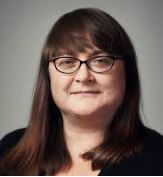 Rachel Lord is a member of BlackRock’s Global Executive Committee. She is a Senior Managing Director, is Head of Europe, Middle East and Africa for BlackRock. Prior to assuming her current role in September 2017, she was EMEA Head of iShares and Head of Global Clients, ETF and Index Investments. Lord joined BlackRock in November 2013 from Citigroup where she was the Global Head of Corporate Equity Derivatives. She joined Citigroup in 2009 after thirteen years at Morgan Stanley. She graduated in 1987 from the University of Leeds with a BA (Hons) First Class in International History & Politics.
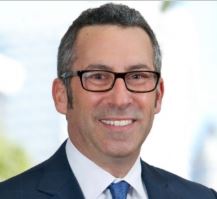 Gary Shedlin is a member of BlackRock’s Global Executive Committee and is BlackRock’s Chief Financial Officer. Prior to joining BlackRock in 2013, Shedlin was at Morgan Stanley where he was a Vice Chairman, Investment Banking, and a Managing Director in the Financial Institutions Group. Prior to joining Morgan Stanley, Shedlin was Chairman of Citi’s Financial Institutions Group and a Managing Director and Co-Head of the Financial Institutions Group at Lazard. Shedlin received a BA in Economics, summa cum laude, from Colgate University, and his MBA from Harvard Business School.
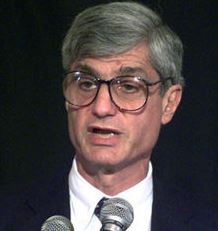 Robert Edward Rubin is an American retired banking executive, lawyer, and former cabinet member. He served as the 70th United States Secretary of the Treasury during the Clinton administration. Before his government service, he spent 26 years at Goldman Sachs. During the Clinton administration, Rubin oversaw the loosening of financial industry underwriting guidelines. His most post-government role was as director and senior counselor of Citigroup, where he performed advisory and representational roles for the firm and resigned from the company on January 9, 2009. He received more than $126 million in cash and stock during his tenure at Citigroup, up through and including Citigroup’s bailout by the U.S. Treasury. Additionally, Rubin serves as counselor at Centerview Partners, an investment banking advisory firm based in New York City.
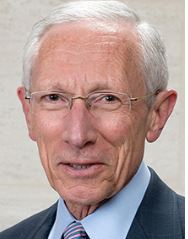 Stanley Fischer took office as a member of the Board of Governors of the Federal Reserve System on May 28, 2014, to fill an unexpired term ending January 31, 2020. He resigned on October 13, 2017. Prior to his appointment to the Board, Dr. Fischer was governor of the Bank of Israel from 2005 through 2013. From February 2002 to April 2005, Dr. Fischer was vice chairman of Citigroup. Dr. Fischer served as the first deputy managing director of the International Monetary Fund until August 2001. From January 1988 to August 1990, he was the chief economist of the World Bank. Dr. Fischer was born in Lusaka, Zambia, in October 1943. He received his BSc and MSc in economics from the London School of Economics. He received his PhD in economics from the Massachusetts Institute of Technology.